* The artwork titled "Charity" at the bottom, is from the Art Bible, The Holy Bible, Illustrated. Comprising the Authorized Version of the Old and New Testaments. Embellished with 852 Illustrations. London Art Edition, Published by New York: The Christian Herald, 1897.
>1. What kind of Bible students were the Corinthians Christians? (2)
* 1 Corinthians 11:2 "I praise you for remembering me in everything and for holding to the teachings, just as I passed them on to you."
*
Chapter 11:1-16 Overview.
Paul is now writing about an ancient Jewish and Middle East tradition. Specifically that a woman is to wear a head covering during a religious service and a man is to take his hat off. This is not done in almost all congregations now.
However, movies and videos from before the 1960s portray this was done as a matter of religious law for quite some time. Women wore hats except inside their homes. Men were always taking theirs off inside. I really don't prefer one way or another. It's a tradition backed up by Paul's logic, not a law or commandment.
The Bible, congregations, and denominations have traditions and society's customs that people have mistakenly believed are requirements needed to remain in a good close relationship with God. They mistakenly back this up by the feelings we get when we believe we have been a good moral and ethical person.
They say, "God testifies in my soul that this is the right thing." When in fact it's just a self-induced physical reaction to self-righteousness. Pride is also a feel-good emotion. Pride puffs up. Pride imposes self-righteous action on others to the detriment of many. Jesus came harshly rebuking the religious leaders of his day for such practices. He called them white-washed tombs that kill people. The church is filled with many stones to this day.
I have preferences. I like doing things a certain way. Some are based on something I read in the Bible or a religious article. Some are just a habit. But I need to remember that they are my preferences. I should never impress them on others. I can suggest it to someone under my care and guidance. I would be wrong to exasperate them.
Listen to the above Chapter 11:1-16 Overview.
* "I praise you for remembering me in everything" -The congregation paid attention to Paul's teachings, even items that countered their cultural teachings and traditions.
* "and for holding to the teachings" -Not commands. The original Greek verb "paradosis" (a transliteration) does not mean commandment, but rather a Jewish traditionary law.
* "just as I passed them on to you." -Paul passed the teaching (traditions) on as a relay race passes a baton, stating he was not the originator.
The teachings were not confined to the items in this chapter which dealt only with their prayers, prophesies, and meetings. The prayer and prophecies attire traditions here concern whether or not a person should have a head covering or not (4-16). Some more specific dress traditions are stated in 1 Timothy 2:9-10 and 1 Peter 3:3-6.
Verses 17 to the end of the chapter deals with their meetings, in particular for the Lord's Supper. It can be assumed that this is only part of the teaching on the Lord's Supper, for when he ends, "And when I come I will give further directions," (34b) it applies to that. Some English translation seem to imply it means other subjects. (2 Corinthians 1:17) But the commentaries I have do not agree with that interpretation.
* Traditions.
Apostle Paul started the congregation at Corinth. He was there for only eighteen months. He started preaching Jesus in the Jewish synagogue, but left it to form a Christian congregation. (Acts 18:1-18) Before he left the city, he established the basics of the Christian congregation after the model of a Jewish synagogue. The same basic bylaws were applied to all the Christian congregations.
The congregations followed Jesus's teaching as first taught by Paul, and later by Silas, Timothy, and Apollos. However, the congregation at Corinth needed many bylaws on matters Jesus did not teach. Some were what days and times to meet, where to meet, who would be responsible for the finances, etc. Paul praised them for keeping these bylaws after he left. He called them traditions, though the NIV translates the Greek word treachings, and the KJV translates it ordinances.
Other bylaws are presented in this chapter, perhaps ones that Apostle Paul did not discuss with them while he was with them. The traditions he discusses in this chapter have to do with the nature of their worship service. More on that in the days ahead.
I learn from today's one verse that traditions and bylaws are a lot like good habits in a personal life. I have bad habits that I have unlearned. Good habits are a wise thing to organize a life. I am not a morning person. I have always awakened slowly. Waking up early to dedicate time to writing daily bread took years. This good habit is still not easy some mornings, but the effects of making it a habit make it easier, and I am better because of it. Make some good habits my bylaws, and make some good family traditions.
Listen to the above comments on 1 Corinthians 11:2.
>What is the organization mode in verse 3?
* 1 Corinthians 11:3 "Now I want you to realize that the head of every man is Christ, and the head of the woman is man, and the head of Christ is God."
* "head" -Paul uses "head" both literally and figuratively in this verse. Ancient writers often based arguments on wordplays, as Paul does here.
* "Now I want you to realize that the head of every man is Christ" -Does "every man" mean every Christian, or all men? It means every Christian for Jesus said to the Pharisees, "Your father is the devil, and you want to carry out your father's desire." (John 8:44a) So the head, leader of some is Christ Jesus, and the head, leader of others is the devil.
* "and the head of the woman is man" -The original Greek noun for "woman" is the noun "gyne" and for "man" is the noun "aner" (transliterations). It appears that Paul places man in the place of the mediator between Christ and women just as Christ is mediator between God and man. Very unusual considering that women were also given the gift of prophecy in both the Old and New Testament. In the New Testiment, the older women are told to instruct the younger women. Thus, they definately would need to have the gift of prophecy to do that in those days for the gospels and letters of the apostles, with the exceptions of 1 & 2 Thessalonians and probably James, had not been written and generally distributed among the congregations. And this paragraph seems to indicate that women were permitted to prophecy during the worshp service.
* "and the head of Christ is God." -Jesus submitted to the Father, and in his submission becoming like us, he confirmed that within the trinity, God is his father.
* And the Responsibility Goes To?
Paul begins to expand on worship service traditions (teachings) with the general truth in verse 3. The keyword in verse 3 is "head", translated from the Greek noun "kephale" (a transliteration), used 75 times in the New Testament. It literally means "head" or "top" and, metaphorically, signifies authority, leadership, and preeminence, particularly in discussions of roles. (Ephesians 5:23)
Jesus confirmed that God, his Father, is his head, meaning his authority. (John 5:19) Christ is the head of man since God the Father placed him over man, and Jesus gave himself up for and will judge all mankind. (Matthew 17:5; John 3:35-36, 5:26-27)
Man is the head of woman. Perhaps that truth is the reason for Paul's transition, "Follow my example, as I follow the example of Christ." (1) Some Greek women probably enjoyed their newfound freedom in Christ so much that they stopped following the cultural norm of wearing head covering in public and went about topless. (I purposely stated it that way to give it the same shock they induced in their culture.)
Man was made for Christ, the Lord God. Eve was made next for Adam. (Genesis 1:26-27, 2:15, 18, 20b-22) However, Paul states elsewhere that this is only in the physical sense, not the spiritual: "You are all sons of God through faith in Christ Jesus, for all of you who were baptized into Christ have clothed yourselves with Christ. There is neither Jew nor Greek, slave nor free, male nor female, for you are all one in Christ Jesus." (Galatians 3:26-28) The "all sons of God" status will prevail when the body decays, unless Jesus has a special place for you.
Some years ago I read in a book written by a married couple, the wife stated that the woman has been given the better place for the responsibility relies on the man. He is to listen to the counsel of his God and wife and make a decision. Any fault, any error, any casualty, and any miscarriage will be his responsibility. He can blame no one but himself. Adam cannot blame Eve, though he did. (Genesis 3:12) She was deceived first, and Adam is to blame for he was there, said nothing, and disobeyed God. (Genesis 3:6, 17)
So, God is the head of Christ, Christ the head of man, and man the head of woman. The responsibility of man is the woman and to obey Christ, as the obedience of Christ is to the Father and the responsibility of man's salvation was Christ's.
Listen to the above comments on 1 Corinthians 11:3.
>2. With what attitude should a man and a woman pray and teach the Bible? (4-5)
* 1 Corinthians 11:4-5 "Every man who prays or prophesies with his head covered dishonors his head. And every woman who prays or prophesies with her head uncovered dishonors her head--it is just as though her head were shaved."
* "Every man who prays or prophesies with his head covered dishonors his head." -I am not sure where this started, but it was the norn in most societies for many generations. Taking off a head covering was showing respect. A commentary I have gives this example to explain. Suppose a king summons one of his nobleman or princes. When the summoned enters the king's chambers they do not remove their head covering used to represent their honor in public. Basically, they are displaying their glory and honor to their king which gave and keeps in place their glory. In doing this they insult their king, implying their glory is theirs and not granted to them by the king.
* "And every woman who prays or prophesies with her head uncovered dishonors her head" -Paul will explain why this is needed. He does not do this with man. Thus, it can be assumed that this section was written because some women were praying and prophecying during their meetings without head covering and Paul was telling them to stop that and show some respect to God, the church, and to themselves.
* "it is just as though her head were shaved." -Prostitutes in the area had shaved heads as a type of advertisement and sometimes as a brand of ownership to a god or temple. Wives caught in the act of adultery often had their hair cut off to shame them, publically calling them as filthy and used as a prostitute. Either way a woman with a shaved head lost her self dignity.
* "prophecy" -Defined well in chapter 14, especially 14:3-4, 22, 24-25, 29-33.
* 1 Peter 3:3 "Your beauty should not come from outward adornment, such as braided hair and the wearing of gold jewelry and fine clothes."
>Why do you think a woman Bible teacher should cover her head? (6-9)
* 1 Corinthians 11:6-9 "If a woman does not cover her head, she should have her hair cut off; and if it is a disgrace for a woman to have her hair cut or shaved off, she should cover her head. A man ought not to cover his head, since he is the image and glory of God; but the woman is the glory of man. For man did not come from woman, but woman from man; neither was man created for woman, but woman for man."
* "If a woman does not cover her head, she should have her hair cut off" -Paul is all but using satire. Prostitutes would shave their hair off as advertisement. Prostitutes were mostly slaves, though some were in it for the money.
* "if it is a disgrace for a woman to have her hair cut or shaved off" -Paul knew that it would be. Promiscuous woman would cut their hair short, but not completely shaved off. Nobel, rich, and proper women kept their hair long. Many hair styles kept their hair in bundles and even kept that under cover. The only times they let their hair out long was in their homes before their husbands.
* "since he is the image and glory of God" -Genesis 1 and 2 has, "Let us make man in our image." Also, Jesus came as a man, not a woman. However, the wording of Genesis 1 is very interesting concerning "...image of God... male and female..."
* Verses 5-6. For a woman, taking off her head covering in public and exposing her hair was a sign of loose morals and sexual promiscuity. Pauls says she might as well have her hair cut or shaved off. The shaved head indicated that the woman either had been publicly disgraced because of some shameful act or was openly flaunting her independence and her refusal to be in submission to her husband. Paul's message to her was: Show your respect for and submission to your husband by covering your head during public worship.
Some do not see in these verses a temporary cultural significance to the covering/uncovering of the head. They insist that, since Paul referred to the order of creation (7-9), his directive is not to be restricted to his time. Thus women of all times should wear a head covering.
Others find a lasting principle in the passage requiring wives, in all ways, to show respect for their husbands by submitting to their authority - not merely be a particular style of attire, but by godly lives. Man, who was created first is to have authority over his wife (1 Timothy 2:11-14). The wife was made out of his body (Genesis 2:21-24) to be his helper and companion (Genesis 2:20). She is to honor her husband by submitting to him as her head (3).
Still others see these verses, not as a mandate for all marriages, but as reflecting marriage relationships at the time in Corinth and therefore giving a reason why the point of verses 11-12 as a contrast, emphasizing equality and mutual dependency between men and women who are "in the Lord" (11; Galatians 3:28; 1 Peter 3:7). (NIV Study Bible)
* "For man did not come from woman, but woman from man; neither was man created for woman, but woman for man." -Flipped irony. Adam was made from the dust of the earth. Eve was made from a rib that was in Adam's side. All men since were born of a woman, even Christ.
* Verse 9 seems to be a transition of thought from man to husband, so some commentators say.
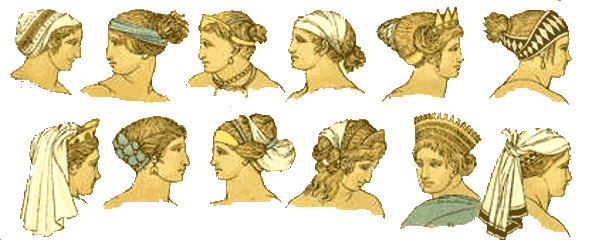
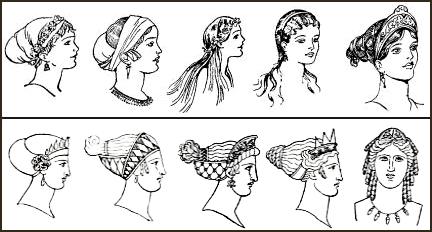
* The three illustrations show ancient Greek women adornment. Hair was braided in elaborate manners, even using hair not their own (a fade in the USA in the 1960s), and well-to-do women strove to keep up with the latest expensive fashions. The gaudy adornments of women of wealth including jewelry in their hair, meant to draw attention to themselves, were repeatedly condemned in ancient literature and speeches whether Christian or otherwise. Apostle Peter's readers would assume that his point was meant in the same way as these other sources. (Bible Background Commentary - The IVP Bible Background Commentary New Testament.)
>What does verse 10 mean?
* 1 Corinthians 11:10 "For this reason, and because of the angels, the woman ought to have a sign of authority on her head."
* "For this reason" -Paul is about to make a concluding statement. So, take the preceding argument in account when understanding verses 10-12.
* "and because of the angels" -Several opinions exist as to the meaning and reason for this statement. Some commentators point out that many opinions exist. One problem many have is the Greek word translated "angels". They ask who or what are the "angels"? Seveal ideas exist, but the prevailing idea is that they are the ministering spirits (Hebrews 11:14) created and sent by God such as to Mary the mother of Jesus to tell her of the conception, etc. (1 Timothy 5:21)
The prevalent one continues that angels that are assigned to be ministering servants to the elect, are present when the elect are gathered. However, surely they can tell the difference between male and female, and between elect and those who are not elect. Do they need the sign of a head covering that symbolizes authority? Apparently so. Now others say that when women do not put on a head covering or veil, the angels witness their rebellion to submission to Christ and man, which is a terrible act. Perhpas, but not probably.
* "a sign of authority on her head." -Some English translations have "veil on her head". The word here in classic secular Greek writings means "power", but translated into English here as "veil on her head" and "sign of authority on her head" because only having "power" here makes no sense. All translators agree to this, but as to its meaning they do not agree. This unique use of the Greek word leads to more interpretations of Paul's meaning and intent of this verse as any other Paulinian statement. Some commentators point out this fact saying the veil or covering has no practical purpose, only meaning behind it. The meaning is she has power, or authority. They disagree that it partly covered the face, only covered the head, or was merely braided hair that covered the head since the word is not used in secular writings in this way. Others say the meaning is her husband has power over her, but I find that a stretch because many men have no hair and are told not to wear a head covering.
* Visible Respect.
The subject continues to be the Corinthian congregation's meetings, specifically the issues that needed correction. Paul commended them for following the teachings, aka traditions, as he passed on to them when he started the congregation (1). All the early founded congregations had the same mood of worship service, which he introduced to the newly founded Corinth church only a few years earlier (16b). The need for visible respect for the Lord God, specifically when praying and prophesying during the meeting, is now being addressed. (4-5)
Before the gospels or the apostles' letters were written and distributed, prophesying, that is, speaking for Jesus, played a foundational role in the early church. (12:28-31; Acts 2:17-18; Ephesians 4:11, 2:20) Organized public prayer has always been a part of corporate worship. Paul instructs them to respect Jesus in their attire according to local custom dress when they pray and prophesy. As a sign of respect, men took off their head covering and women put on their head coverings when praying and prophesying. Even the pagans show respect to their gods in this manner, except for prostitutes and promiscuous women.
The point here is that those who are in the front of the congregation during a worship service should show visible respect as their culture defines respectful dress. Those who lead prayers, worship songs, read the scriptures, give the message and announcements, serve communion, pass the offering trays, and whatever else the local congregation requires a person to do before the Lord and the congregation, should dress and be groomed respectfully.
Respectful and tasteful attire changes from one decade to the next, and from one culture to another. Whatever is prevalent, without being gaudy and meant to bring self-attention, is proper and good. Show respect to Jesus in what I wear.
Listen to the above comments on 1 Corinthians 11:4-10.
>3. Why do you think God made man and woman dependent on each other? (11-12a)
* 1 Corinthians 11:11-12a "In the Lord, however, woman is not independent of man, nor is man independent of woman. For as woman came from man, so also man is born of woman."
* "In the Lord" -Starting with this phrase puts a interesting twist in the stated truth that is hard to understand. None of the commentaries I have address this except one which says that the Lord directs or commands they mutual help each other, regarding and promoting each other. The rest focus on the obvious meaning of this section.
So why is "in the Lord" included? Is the Holy Spirit, through Paul directing us to Genesis? Or is the following statement only concerning those who are "in the Lord"? The truth from a physical point of view cannot be denied for all humans. So, "in the Lord" must mean from a spiritual point of view, that is the church. Surely, the statement concerns Genesis 1 and 2 for only Eve was made from Adam's rib, thus the only woman coming from a man's body and all men, including Jesus, came from a woman's womb from a physical point of view. However, the whole point addressed concerns the church, the body of Christ, not human bodies, male and female. The female and male parts of the church are interdependent, equal under Christ, and yet there is a hierarchy structure. Much thought is needed here. Commentators focus on the top layer, not addressing the "In the Lord" part. Eeye. After over two hours of working on BDBD then driving to work while my head feels like it is filled with cement makes thinking right and writing down my thoughts now hard.
* "is not independent... came from... born of..." -Without one or the other the human race would end. Both sexes are needed for mankind to continue.
* The Lord designed them to be for each other, not independent, but dependent. (7:2-5: Genesis 2:18) The woman should know and show her place and the man should not abuse his authority. Christ is the example.
* Differentiation Invigorates Interdependence.
The Holy Spirit, through Paul, speaks of the interdependence between men and women, both at a general social level and in the personal relationship between husband and wife. Interdependence in sociology and social psychology refers to the mutual reliance among individuals, in which outcomes, behaviors, and emotions are shaped by interactions. Developed by Harold Kelley and John Thibaut in 1959, it assumes that social life involves interconnected lots, requiring coordination and reciprocal exchange to manage shared situations. -In the Lord,- as the Holy Spirit established before creation, man and woman are interdependent of each other. Differentiation invigorates interdependence; the very nature of things has been established.
I have some friends, both male and female, who outwardly loathed and inwardly deeply longed for interdependence, especially the women. -Your desire will be for your husband, and he will rule over you,- was the consequence of doubting God's love. (Genesis 3:17) The two consequences are inward struggles more than outward pressure, the loathing and longing for independence.
Beauty was the design of interdependence between man and woman before the first sin. The Lord God differentiated them, one from the other, and one not continuing without the other. A woman from man. Man born of woman. Both from the other. Both unique, yet one.
The uncovering of the head while praying and prophesying was an outward sign of the inward loathing and longing struggle. The woman's cry for independence, while longing for dependence that love fills. -Your desire will be for your husband, and he will rule over you."
Surely our sins bewilder the beauty of differentiation invigorating interdependence.
Listen to the above comments on 1 Corinthians 11:11-16.
>Who are both ultimately dependent on? (12b)
* 1 Corinthians 11:12b "But everything comes from God."
* God originated both. God is the final authority over both.
>4. What happens to many man's hair that hardly never happens to a woman? (13-14)
* 1 Corinthians 11:13-14 "Judge for yourselves: Is it proper for a woman to pray to God with her head uncovered? Does not the very nature of things teach you that if a man has long hair, it is a disgrace to him,"
* "Is it proper for a woman to pray to God with her head uncovered?" -Not even the pagan women, except their priestesses, appeared in public, prayed, and prophecies with their heads uncovered in their society. It was a matter of modesty, honor, and decency in Grecian society. By taking the head covering off, they were displaying pride.
* "proper" -Believers must be conscious of how their actions appear in their culture, in light of what is considered to be honorable behavior. (NIV Study Bible)
* "Does not the very nature of things teach you that if a man has long hair, it is a disgrace to him," -Long hair on a man before the first century A.D. in most societies was considered a man's sense of fitness and/or appearance. Even still woman's hair easily and more often grows longer and more beautiful than most men. The thought that a man with long fit hair was acceptable and good had begun changing in the Roman Empire before the A.D., at the time of Rome's victory against Carthage in the Second Punic War, due to a famous successful Roman general and statesman. Jewish society had the view of the Nazarene, which required letting the hair grow long, showing it to be an exception to having short hair. See below for more.
* Historical records bear, that in all countries in ancient times, that is, in the first ages, men wore long hair. Hence also the poets, in speaking of the ancients, are accustomed to apply to them the common epithet of untrimmed. It was not until a late period that barbers began to be employed at Rome - about the time of Africanus the Elder (236-183 B.C.). And at the time when Paul wrote these things, the practice of having the hair trimmed had not yet come into use in the provinces of Gaul or in Germany. Nay more, it would have been reckoned an unseemly thing for men, no less than for women, to be trimmed or shaven; but as in Greece it was reckoned an unbecoming thing for a man to allow his hair to grow long, so that those who did so were remarked as effeminate, he reckons as nature a custom that had come to be confirmed. (John Calvin and John Pringle, Commentaries on the Epistles of Paul the Apostle to the Corinthians, vol. 1, 361-362)
>Whose shampoo advertising is most common, man or woman? (15)
* 1 Corinthians 11:15 "but that if a woman has long hair, it is her glory? For long hair is given to her as a covering."
* "but that if a woman has long hair, it is her glory" -God gave woman the ability to have long beautiful hair. No one should restrict that gift.
* "For long hair is given to her as a covering." -Long beautiful hair on a woman is and can be a head covering by itself. Indeed, this was God's intent from the beginning. Surely, to have natural God given head covering, and then to have a man-made head covering is duplicating what God has already established. This is why many early Christian commentators, teachers, and elders state that during a service women, if they were to pray or prophecy, they should braid their hair and wore it as a bundle on their head, or some other arrangement as such, and there is no need for a second man-made covering or veil. Still, others insist that a second man-made covering should be added. Perhaps, what Paul is instructing, if a woman wants to wear her hair long and straight, running over her shoulders and down her back and breasts, instead of braided and placed on top of her head as a covering, then she should cover her head and hair that lays down straight.
* The Author of their being has given a larger proportion of hair to the head of women than to that of men; and to them it is an especial ornament, and may in various cases serve as a veil. It is a certain fact that a man's long hair renders him contemptible, and a woman's long hair renders her more amiable. Nature and the apostle speak the same language; we may account for it as we please. (Adam Clarke, The Holy Bible with a Commentary and Critical Notes, New Edition, vol. 6 (Bellingham, WA: Faithlife Corporation, 2014), 253)
* Should there not be a distinction kept up between the sexes in wearing their hair, since nature has made one? Is it not a distinction which nature has kept up among all civilized nations? The woman's hair is a natural covering; to wear it long is a glory to her; but for a man to have long hair, or cherish it, is a token of softness and effeminacy." Note, It should be our concern, especially in Christian and religious assemblies, to make no breach upon the rules of natural decency. (Matthew Henry, Matthew Henry's Commentary on the Whole Bible: Complete and Unabridged in One Volume (Peabody: Hendrickson, 1994), 2264)
* It is an ornament, and adorning. The same instinctive promptings of nature which make it proper for a man to wear short hair, make it proper that the woman should suffer hers to grow long. (Albert Barnes, Notes on the New Testament: I Corinthians, ed. Robert Frew (London: Blackie & Son, 1884-1885), 208)
>How does verse 16 show that this is a common practice of the time and not a command?
* 1 Corinthians 11:16 "If anyone wants to be contentious about this, we have no other practice--nor do the churches of God."
* "If anyone wants to be contentious about this" -Probably would be some women within the Corinthian congregation.
* "we have no other practice" -Paul knew of no other way.
* "nor do the churches of God." -All the congregations that were started before the one at Corinth as recorded in Acts (and others that are not recorded there) practiced their meetings this way when they meet together as a congregation in the name of Jesus. Paul and the churches in general followed the common custom of the men wearing short hair and the women long hair in their culture. Paul was basing his remarks, particularly in verses 13-16, on common custom in the churches.
The Megiddo Mosaic floor was found and uncovered by the Israel Antiquities Authority in 2005. The mosaic once decorated the floor of a room almost 500 sq. ft. in size that was undeniably used for worship by Christians in early through mid-third century A.D. This room was used 50 years before the Great Persecution in 303 A.D., 100 years before Christianity was legalized in the Roman Empire, and 100 years before Constantine became ruler of the Roman Empire. This was a brief time between persecutions in the area, a time to meet in secret. Perhaps the soldiers would be in uniform to throw off their neighbors and other soldiers suspicions. In many ways, this modestly sized room helps us experience one church community living southwest of the Sea of Galilee before the more formal structures of the church developed in subsequent centuries. This room and its decorations provide a very organic picture of a third-century Christian community.
>5. What is a directive? (17)
* 1 Corinthians 11:17 "In the following directives I have no praise for you, for your meetings do more harm than good."
* Chapter 11:17-34 Overview.
Jesus made a new covenant with anyone who would believe in him (25). When he did, he changed the Passover meal so that I could remember him and what he did for me through his suffering and death. The bread symbolizes his body broken. The wine symbolizes his blood poured out. He told us when his people repeated his new Passover, which we call the Lord's Supper (20b), to do this in remembrance of him. (24)
The Lord's Supper for the early church was an entire meal. Later, because of abuses revealed in this chapter, all food and drink were removed except the bread and wine (not fermented). Paul rebuked the Corinthian congregation for the abuses of the Lord's Supper, for they were harmful (17).
The divisions which he rebuked them for earlier in the letter (1:10-17; 3:3-9; 6:1-8), were also exercised during the Lord's Supper (19). The wealthy who obviously supplied most of the food, if not all, humiliated those who had nothing (22). Some ate a lot, others remained hungry, others got drunk (21).
Paul says that I ought to examine myself before I eat the bread and drink from the cup. I am to discern the body of Christ, for I may be sinning against the Lord's body and blood (27-28). Some were sick, weak, and fallen asleep (physically died) under the Lord's discipline (30).
I do not want to be disciplined by my Lord. The discipline of the Lord is as a Father to a son, and the Father's hand is strong. His plan and desire is that I be mature, made like his Son, Jesus. The fear of the Lord is good. Love for the Lord is better. Lord, forgive my wayward, weak heart.
Listen to the above 1 Corinthians 11:17-34 Overview.
* "In the following directives I have no praise for you" -Interesting choice of words.
* "directive" -A directive is an authoritative instruction or direction; a specific order.
>Should Christian meetings (worship and prayer services) be constructive?
* "for your meetings do more harm than good." -Hence, they should be doing good.
* "meetings" -Paul does not designate the day of the week here, nor in verse 20, nor in the rest of the letter, nor in any of his letters. He never says nor give direction to meet only on the Sabbath (Saturday) or any other day.
>6. What is one main reason there are differences in a congregation? (18-19)
* 1 Corinthians 11:18-19 "In the first place, I hear that when you come together as a church, there are divisions among you, and to some extent I believe it. No doubt there have to be differences among you to show which of you have God's approval."
* "I hear that when you come together as a church,"
* "there are divisions among you, and to some extent I believe it." -They congregate in groups. They have clicks. They include and exclude. Modern day congregations especially commit this sin usually based on looks, status, and money. They are no different that the ungodly.
* "No doubt there have to be differences among you to show which of you have God's approval."
>Why are some approved and others not approved by God? (Rom. 14:17-18; Heb. 11:4; and 1 Thess. 2:4)
* Romans 14:17-18 "For the kingdom of God is not a matter of eating and drinking, but of righteousness, peace and joy in the Holy Spirit, because anyone who serves Christ in this way is pleasing to God and approved by men."
* Hebrews 11:4 "By faith Abel offered God a better sacrifice than Cain did. By faith he was commended as a righteous man, when God spoke well of his offerings. And by faith he still speaks, even though he is dead."
* 1 Thessalonians 2:4 "On the contrary, we speak as men approved by God to be entrusted with the gospel. We are not trying to please men but God, who tests our hearts."
>7. Why is the Passover that Jesus ate with is disciples called the Lord's Supper? (20; Luke 22:14-15)
* 1 Corinthians 11:20 "When you come together, it is not the Lord's Supper you eat,"
* Luke 22:14-15 "When the hour came, Jesus and his apostles reclined at the table. And he said to them, "I have eagerly desired to eat this Passover with you before I suffer."
* "When you come together" -Purposely not stating the day of the week they meet together. Probably our Sunday, the first day of the week, the day Jesus rose from the day, the day held more important to the early church.
* "it is not the Lord's Supper you eat,"
* Passover on the year that Jesus held the Last Supper was on our Thursdays night at sunset, the beginning of the Hebrew Friday. Hebrew days start at sunset and end at sunset the next day. The early churches did not celebrate the Lord's Supper on the Roman Friday evening, nor the Hebrew (Jewish) Sabbath. Most passages that mention a day in the New Testament state the first day of the week, Sunday.
>What problems occurred during their practice of the Lord's Supper? (21)
* 1 Corinthians 11:21 "for as you eat, each of you goes ahead without waiting for anybody else. One remains hungry, another gets drunk."
* "each of you goes ahead without waiting for anybody else" -Those who arrived later did not get because all was gone. They did not have clocks as we do now.
* "gets drunk" -Either from the communal wine or from wine served during the meal. Debate as to the nature of the communal wine has been raised since before the reformation. It is transformed as the Catholics say, does it remain wine, was it fermented with yeast, is it without yeast? To much opinions exist to comment here, escept the only way to get drunk is drink fermented wine.
>How did those who brought food seem to treat those who did not? (22)
* 1 Corinthians 11:22 "Don't you have homes to eat and drink in? Or do you despise the church of God and humiliate those who have nothing? What shall I say to you? Shall I praise you for this? Certainly not!"
* "Don't you have homes to eat and drink in?" -Paul's statement ended the practice of having a full meal when they celebrated the Lord's Supper.
* "Or do you despise the church of God and humiliate those who have nothing?" -They despised the congregation by humiliating the poor in the congregation. Separation of wealthy and poor has always been a problem in the church.
* Paul's intent was to bring a gift from all the churches in the area to the poor in Jerusalem who was undergoing severe persecution by the hands of the Jewish leadership. They were kicked out of the synagogues and not given work. How could Paul count on Corinth's congregation charitable giving if they humiliated those in their own congregation?
* By Your Fruit You Are Revealed.
Jesus said, "Watch out for false prophets. They come to you in sheep's clothing, but inwardly they are ferocious wolves. By their fruit you will recognize them. Do people pick grapes from thornbushes, or figs from thistles? Likewise, every good tree bears good fruit, but a bad tree bears bad fruit." (Matthew 7:15-17) When divisions come, which fruit is sour and which is sweet can be determined (18). The Holy Spirit says through Paul, "No doubt there have to be differences among you to show which of you has God's approval." (19)
The selfish problem of these wolves in sheep's clothing was exposed during the Lord's Supper in the Corinthian congregation, which, in the early church, was a full meal, as it was at the Last Supper. The wolves did not allow the poor in the congregation, whom they were responsible for, to have food, and they themselves got drunk (21). The rich wolves humiliated and isolated the poor, thus exposing their hypocrisy (Ezekiel 34:7-10). Jude wrote, "These men are blemishes at your love feasts, eating with you without the slightest qualm--shepherds who feed only themselves. They are clouds without rain, blown along by the wind; autumn trees, without fruit and uprooted--twice dead." (Jude 1:12) They promise relief, but do not deliver.
The Spirit through Apostle Peter promises, "They will be paid back with harm for the harm they have done. Their idea of pleasure is to carouse in broad daylight. They are blots and blemishes, reveling in their pleasures while they feast with you." (2 Peter 2:13) Jesus warns us, "Watch out that no one deceives you. For many will come in my name, claiming, 'I am the Christ,' and will deceive many... and many false prophets will appear and deceive many people. Because of the increase of wickedness, the love of most will grow cold, but he who stands firm to the end will be saved." (Matthew 24:11-13) Consider also the warnings of Acts 20:29-30, Galatians 1:6-9, Philippians 3:2, Colosians 2:4, 8, 18, 20-23; 2 John 7-11; Jude 3-4. These wolves are from within, not without. Be alert.
Listen to the above comments on 1 Corinthians 11:17-22.
* The artwork "The Last Supper" is from a book by Fortunat, F. titled "Hochschätzbarer Seelen Ehren Thron : das ist Ein wahrhafftes Formular, oder allbewerteste Richtschnur ... die Seel ... in allweg sicher zu stellen", now in public domain.
On the left, cherubs draw an ornamental cloth away from the text revealing columns atop plinths in the background. On the right, Jesus presides over the Last Supper with his disciples crowded closely around. A chandelier with lit candles is suspended above the table, and several drinking and foot washing vessels appear in the foreground. The attendant scripture above is 1 Corinthians 11:24 and below is Matthew 26:27.
Courtesy of the Digital Image Archive, Pitts Theology Library, Candler School of Theology, Emory University.
>8. What did Jesus say the bread represents? (23-24)
* 1 Corinthians 11:23-24 "For I received from the Lord what I also passed on to you: The Lord Jesus, on the night he was betrayed, took bread, and when he had given thanks, he broke it and said, "This is my body, which is for you; do this in remembrance of me.""
* "For I received from the Lord what I also passed on to you" -In the first century, the Koine Greek verb "paralamban" (a transliteration) meant "to take along," "to receive," or "to accept." It is a compound verb formed by combining para (beside, from beside) and lambano (to take), frequently signifying receiving something or someone from someone else, often in a context of personal association, education, or tradition.
* Matthew 26:26-29, Mark 14:22-25, and Luke 22:17-20 also record the Last Supper.
* Thanksgiving Is...
Apostle Paul says he "received" from the Lord the method and meaning of the Lord's Supper. The Greek verb for "received" is "paralambano", associated with being educated in a tradition from someone else. A NIV text note says, "Paul does not necessarily mean that he received the Lord's Supper directly from Christ. The information was probably passed on to him by others who had heard it directly from Jesus", perhaps Ananias or Barnabas of Damascus. (Acts 9:10, 17-22, 27)
Apostle Paul conveys that, on the night Jesus was betrayed, he took bread and gave thanks (24). Giving thanks was the Jewish practice at meals, especially the Passover. The word Eucharist comes from the Greek "eukharistia" and "eukharistos", meaning "grateful", "thankful", "to show favor", and "grace". The Israelites were thankful for being freed from slavery in Egypt. But why was Jesus thankful? He knew his betrayer sat in the room with him. (Luke 22:21-22)
Jesus tells us why. "This is my body, which is for you." (24a) Jesus was thankful that he could obey his father in providing the way for those he loved to be saved from slavery to sin and death. Not only was he thankful, but Jesus was eager to obey. "I have eagerly desired to eat this Passover with you before I suffer. For I tell you, I will not eat it again until it finds fulfillment in the kingdom of God." (Luke 22:14-15)
Even though my future looks to be a walk in a dark, trashy alley full of possible assailants and temptations, I will be thankful for the here and now. The Lord's Supper is a time to be grateful. My immediate future is unknown. Jesus knew his immediate future. Yet, he had reasons to be thankful. He looked forward to the fulfillment of the Supper in the kingdom of God. Lord, let others find a few to share your Supper with, to be thankful with.
Listen to the above comments on 1 Corinthians 11:23-24.
>The wine represents? (25)
* 1 Corinthians 11:25 "In the same way, after supper he took the cup, saying, 'This cup is the new covenant in my blood; do this, whenever you drink it, in remembrance of me.'"
* "after supper" -After the Passover supper. The Lord's Supper was first celebrated by Jesus in connection with the Passover meal (see the Synoptic Gospels). During the Passover Jesus introducted the remembrance of this body via the bread. "After the supper" reveals that a gap of time existed before he passed the cup of wine.
* This occurred after the observance of the usual paschal supper. It could not, therefore, be a part of it, nor could it have been designed to be a festival or feast merely. The apostle introduces this evidently in order to show them that it could not be, as they seemed to have supposed, an occasion of feasting. It was after the supper, and was therefore to be observed in a distinct manner. (Barnes' Notes on the New Testament)
* "This cup" -A symbol of the new covenant in Jesus' blood. (Luke 22:20, Jeremiah 31:31-34)
>What is a covenant and how is this a new one?
* A covenant is a binding agreement, a compact. In the Bible, God's promise to the human race. Several types of covenants exist. One is a two sided covenant, such as God's covenant with Israel. Another is a one sided coveant, such as God's covenant with Abraham. The New Covenant is a one sided covenant.
* "is the new covenant" -The old covenant was the Mosaic or Sinaitic covenant. (Exodus 24:3-8) By use of this covenant sign God signifies his bestowal of salvation upon his people, sealed and paid for by the shedding of Jesus' blood. (John 19:34-35)
* "in my blood" -Jesus' blood was not in the cup. His blood was still in his body. His blood would be poured out during the trials and on the cross. Apostle John witnessed water and blood coming out of Jesus' chest when the soldier pierced his heart with a spear.
* "do this, whenever you drink it" -Not just once a year, not just every once in a while. But many times, often.
>Why is it important to proclaim Jesus' death? (26)
* 1 Corinthians 11:26 "For whenever you eat this bread and drink this cup, you proclaim the Lord's death until he comes."
* "For whenever you eat this bread and drink this cup" -Both.
* "you proclaim the Lord's death until he comes." -Commentary besides what Jesus said about it.
* "proclaim" -The original Greek verb is "katangello" also translated "preach", "show", "declare", "teach", and "speak of" in the KJV. Strong's dictionary says it is from two words meaning "to proclaim". The second word is "aggelos" which means "angels" and "messengers". Angels in the New Testament are messengers that minister to the saints. We, like the angles proclaim Jesus' death when we eat the bread and drink the wine.
* Proclaim the Lord's Death.
Apostle Paul recants that the cup of wine was shared "in the same way" as the bread, with all the apostles. Both the bread and wine are a remembrance of Jesus and his suffering and death for our salvation. Jesus took simple worldwide available food and drink, and used them to help us not forget him.
Jesus set up the New Covenant at the time when Israel was to remember the Old Covenant Passover, salvation from slavery in Egypt. This helps us understand the meaning behind his sacrifice for freedom from slavery to sin and the fear of death. The remembrance is a living sermon for all generations until he comes again. Christ's blood establishes the New Covenant between God and man, one of forgiveness and grace. (Hebrews 8:6-13, 9:15)
The old sacrifices brought sins continually to remember (Hebrews 10:1, 3) and required continual offerings of animals. The Lord's Supper is a remembrance of Christ and his sacrifice once for all for the full and final remission of sins. We remember continually the one sacrifice that saves many, proclaiming his death until he comes again to fulfill the New Covenant promise of eternal life with him in the kingdom of God.
Listen to the above comments on 1 Corinthians 11:25-26.
>9. What should our attitude be during the Lord's Supper? (27-29)
* 1 Corinthians 11:27-29 "Therefore, whoever eats the bread or drinks the cup of the Lord in an unworthy manner will be guilty of sinning against the body and blood of the Lord. A man ought to examine himself before he eats of the bread and drinks of the cup. For anyone who eats and drinks without recognizing the body of the Lord eats and drinks judgment on himself."
* "Therefore" -Conclusion to his point. The conclusion is detailed.
* "an unworthy manner" -The Greek word is an adverb, not an adjetive. The "unworthy manner" is defined in verses 17-22 and 33-34, but can be extended to any attitude sin, including one against a brother or sister in Christ during the time of celebrating the Lord's Supper. The worthy manner is with a deep sense of our sinfulness, our need of a Savior, and with some just views of the Lord Jesus as our Redeemer.
* "will be guilty of sinning against the body and blood of the Lord" -Violating.
* "without recognizing the body of the Lord" -Jesus commanded, "Eat it... Drink it... Do this in remembrance of me." If we do not obey from the heart, then we sin. "Body" here is Jesus, of course, but it is also his disciples. (6:17, 19-20) By disgracing other members of the congregations, who also are in Christ's body, they are sinning against Christ's body.
* "eats and drinks judgment on himself." -The judgment is self induced. Participation alone is not enough. The Old Testament law of the covenant was the same. Obedience was good, but if the heart was not in it, it brought judgement, this he said in chapter 10.
* Both the righteous and unrighteous were participating in the Lord's Supper in Corinth. Even Judas was at the Last Supper for Jesus said to all after he gave the bread and cup, "But the hand of his who is going to betray me is with mine on the table." (Luke 22:21-22; John 13:18, 20-21)
* Unworthy Manner.
Apostle Paul continues to correct faults in Corinth's congregational meetings. The current subject is the Lord's Supper, the remembrance and thanksgiving of Christ's body and blood given for us through the bread and wine.
After stating their misconduct and passing on to them Jesus' words on the night Jesus was betrayed, he concludes with judgment: "Therefore, whoever eats the bread or drinks the cup of the Lord in an unworthy manner will be guilty of sinning against the body and blood of the Lord."
The Greek adverb for "unworthy" describes taking the Lord's Supper without proper reverence, respect, and recognition of its significance. Paul's direction was for every believer to examine themselves before eating the bread and drinking from the cup. It is not that I do not have sufficient worth, but that I am not participating in a worthy manner. I only need to recognize Jesus' sacrifice and let him live in my soul.
Listen to the above comments on 1 Corinthians 11:27-29.
>What is the result of a lack of respect during worship service and the Lord's Supper? (30-31)
* 1 Corinthians 11:30-31 "That is why many among you are weak and sick, and a number of you have fallen asleep. But if we judged ourselves, we would not come under judgment."
* "That is why many among you are weak and sick" -The judgment of God, just the same as the Israelites lead out of Egypt.
* "a number of you have fallen asleep" -The physical body ends while the soul and spirit are "asleep". Jesus said of the little girl before he rose her from the dead, "She is not dead, but asleep."
* "But if we judged ourselves, we would not come under judgment." -Paul assumes they will understand that when they examine themselves they will direct their heart they will repent of any sin against another, so that they may concentrate of Jesus.
* Paul takes the specific case, knowing anyone can commit this sin. So this can be applied to anyone, including himself for he wrote, "if we". All believers in Jesus should judge themselves before the Lord's Supper.
>10. Why should we pay attention when many become sick and weak in a congregation? (32)
* 1 Corinthians 11:32 "When we are judged by the Lord, we are being disciplined so that we will not be condemned with the world."
* "When we are judged by the Lord" -Not the final judgment for those who are only sick. Rather, judgment before final judgment so they will repent. Those who have fallen asleep, will face final judgment, the Bema Seat of Christ.
* "disciplined" -The original Greek verb is "paideuo" translated "chasten", "chastise", "learn", "teach", and "instruct" in the KJV (a transliteration). The meaning is to train up a child, i.e. to educate, or (by implication) discipline (by punishment).
* "condemned with the world." -Those who have not turned their hearts to God.
>How can we show others respect during congregational celebrations? (33-34)
* 1 Corinthians 11:33-34 "So then, my brothers, when you come together to eat, wait for each other. If anyone is hungry, he should eat at home, so that when you meet together it may not result in judgment. And when I come I will give further directions."
* "when you come together to eat" -Only the times they take the body and bread as Jesus commanded. This does not apply to meetings for other reasons.
* "If anyone is hungry, he should eat at home" -They decided to drop the whole meals because of this statement.
* "so that when you meet together it may not result in judgment" -Fear of God's disciple compeled them to make changes.
* "And when I come I will give further directions." -What they were we do not know. 2 Corinthians 1:15-17 indicates that he was unable to go to Corinth because of a tight schedule to arrive in Jerusalem with the gifts from the Gentile churches before bad weather set in.
* Stand on Scales.
The bold say as Job, "If I have walked in falsehood or my foot has hurried after deceit-- let God weigh me in honest scales and he will know that I am blameless-- if my steps have turned from the path, if my heart has been led by my eyes, or if my hands have been defiled, then may others eat what I have sown, and may my crops be uprooted." (Job 31:5-8)
The humble and wise first judge themself - finding improper thoughts to stop, finding acts of love to commit to, and asking God for forgiveness and the will to follow through with these changes. "If we judge ourselves, we would not come under judgment" (31). The wisdom God showed Paul is about stepping on the judgment scales, and he gave it to the Corinthian congregation.
Some in the congregation in Corinth were guilty of sinning against the body and blood of the Lord. (27) They did not allow the poor to participate in the Lord's Supper. Others got drunk. (21) They did not step onto the judgment scales. God placed them on the scales and they were not approved by God just as Cain was not approved. (19; Genesis 4:1-13) Others were approved by God, as Abel's sacrifice was approved.
The unapproved fell under the Lord's discipline, as a father disciplines his children (31-32). Some were weak and sick. Others fell asleep; that is, their physical bodies ceased to function (30). Do not be condemned with the world. Submit to the Lord's discipline and change.
Listen to the above comments on 1 Corinthians 11:29-34.